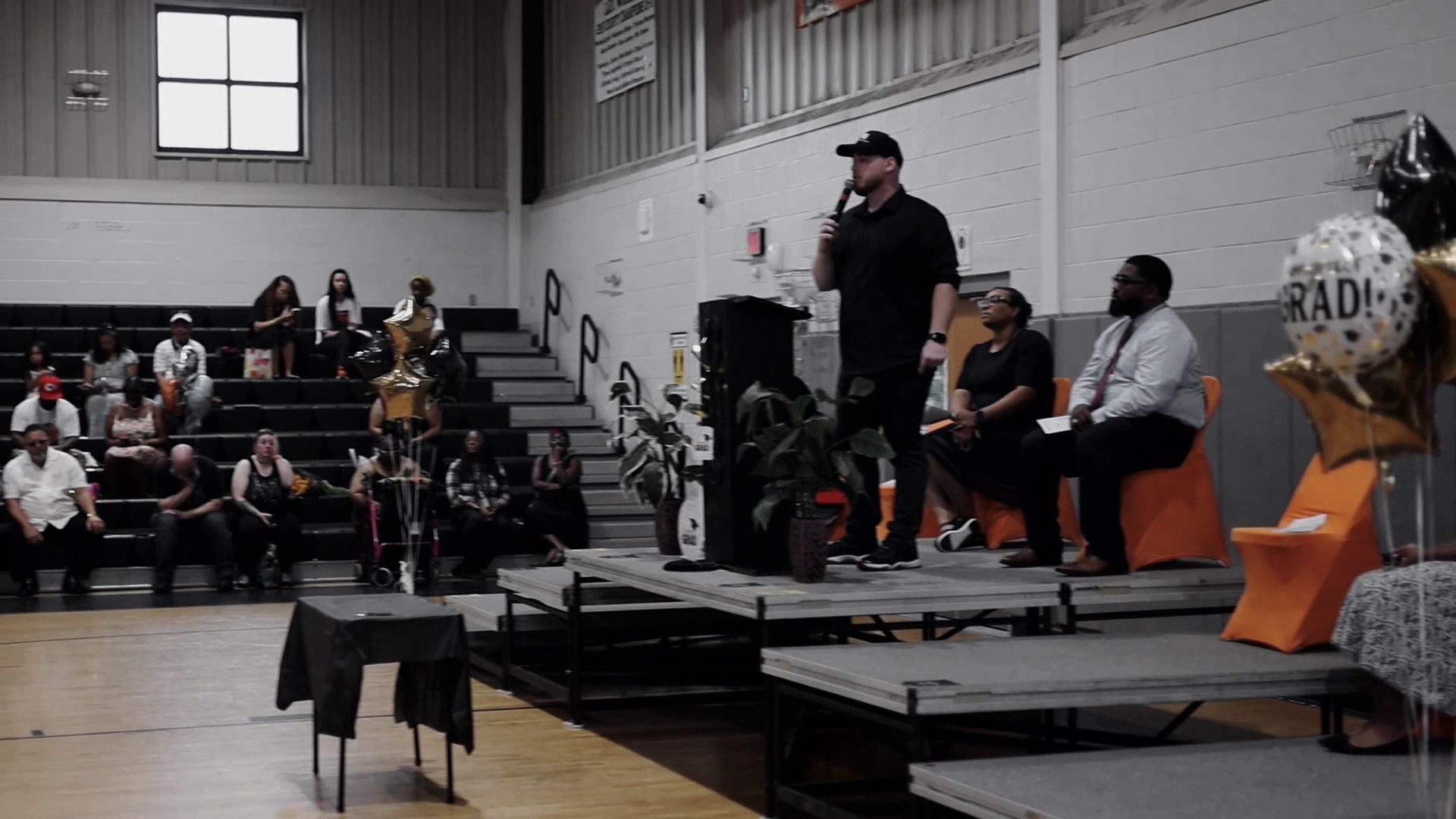
Michael K. Gainey’s story began in instability and survival. His mother became pregnant at 17, and his father battled drug addiction and moved in and out of his life because of prison. He grew up in extreme poverty in a home where rats and roaches crawled across the floors and over him throughout the night. Long before he understood what safety meant, he learned what it felt like to live without it.
His struggles followed him into school. Michael was expelled from two schools and placed on ADHD medication, often feeling labeled instead of understood. He carried the weight of feeling different, misunderstood, and disposable in systems that were never designed to see his full story. As he grew older, life presented challenges that went far beyond academics.
Later in life, Michael was diagnosed with a brain tumor, a cyst, and hydrocephalus. He underwent three brain surgeries that forced him to confront fear, mortality, and purpose in ways most people never experience. During one of these moments, his heart stopped. In the aftermath, he faced crippling anxiety and constant fear of what could happen next. Alongside these physical battles, he struggled with OCD, anxiety, and depression. He also lost two uncles to alcoholism, deepening his understanding of how unresolved pain can quietly shape lives, choices, and futures.
For years, Michael felt trapped by circumstances he did not choose. Pain felt like a prison he could not escape. Everything began to shift when he started asking himself a question that would change his life: WHAT IF YOU CAN™.
Today, Michael speaks because he knows what it feels like to be drowning in fear while everyone else assumes you are fine. Through the WHAT IF YOU CAN™ TOUR, he brings a new perspective to student mental health by revealing the science behind fear-based thinking and teaching students how to shift their mindset and transform fear into fuel for growth. His message leaves students more confident in their struggles, more knowledgeable about mental health, and more determined to rise above their circumstances and become the best versions of themselves.
He does not just inspire students. He helps them see themselves differently. And in that shift, lives begin to change.


Chronic absenteeism has become one of the most serious challenges facing schools today. Across the United States, a large number of students miss so much school that they lose a significant portion of their education. When students miss 10 percent of the school year or more, they are considered chronically absent. Missing this much classr
Chronic absenteeism has become one of the most serious challenges facing schools today. Across the United States, a large number of students miss so much school that they lose a significant portion of their education. When students miss 10 percent of the school year or more, they are considered chronically absent. Missing this much classroom time makes it much harder for students to keep up with learning, stay engaged in school, and reach their full potential. Research shows that students who are chronically absent are more likely to fall behind academically, struggle with reading and math, and are at a higher risk of dropping out of school.
A growing amount of research also shows that poor mental health is a major reason why students stay away from school. Anxiety, fear, and lack of emotional support can make the idea of going to school feel overwhelming for many young people. Traditional approaches to attendance often focus on rewards or punishments, but these do not address the deeper issues that keep students from showing up. The WHAT IF YOU CAN™ TOUR helps schools solve this problem by focusing on the mindset and mental health challenges behind chronic absenteeism. Michael K. Gainey’s program uses psychology and practical willpower strategies to help students understand how their minds work, manage fear and anxiety, and develop the confidence to face school every day. By strengthening mental health awareness and teaching students to take ownership of their decisions and well-being, the tour helps create a school culture where students feel supported, engaged, and ready to participate. This approach does not simply reduce absences for a short time but builds lasting change in how students think about themselves and their role in school.

Student mental health is one of the most urgent issues facing schools today. Rates of anxiety, depression, and emotional distress among students have risen sharply in recent years. National surveys show that about one in three high school students report persistent feelings of sadness or hopelessness. Nearly one in five students have seri
Student mental health is one of the most urgent issues facing schools today. Rates of anxiety, depression, and emotional distress among students have risen sharply in recent years. National surveys show that about one in three high school students report persistent feelings of sadness or hopelessness. Nearly one in five students have seriously considered suicide. Many young people carry these struggles quietly, which affects their focus, behavior, relationships, and ability to learn. When mental health declines, attendance drops, motivation falls, and students often disengage from school altogether.
One reason this crisis continues is that many students do not understand what is happening inside their minds. They feel stress, fear, and anxiety but lack the language or knowledge to process it. When students learn how their brain responds to fear, how thoughts influence emotions, and how choices shape behavior, they gain clarity and control. This understanding is essential for student development today because the teenage brain is still developing areas responsible for decision making, emotional regulation, and risk assessment. Without guidance, students often react instead of respond.
The WHAT IF YOU CAN™ TOUR helps students understand their minds on a scientific and practical level. Michael K. Gainey teaches students how fear based thinking works, how the brain and nervous system respond to stress, and how they can redirect their thoughts toward growth. When students understand the science behind their emotions, they stop seeing themselves as broken and start seeing themselves as capable of change. This builds confidence, resilience, and emotional awareness. Students leave with tools they can use daily, which supports healthier decisions, stronger self control, and better academic and personal outcomes.

Student disengagement has become one of the most common challenges schools face today. Many students attend class physically but are mentally and emotionally disconnected from learning. Teachers across the country report that students are participating less, showing lower motivation, and putting in minimal effort on assignments. Some stud
Student disengagement has become one of the most common challenges schools face today. Many students attend class physically but are mentally and emotionally disconnected from learning. Teachers across the country report that students are participating less, showing lower motivation, and putting in minimal effort on assignments. Some students struggle to see how school connects to their future, while others feel overwhelmed by personal pressures, academic stress, or emotional challenges. When students stop believing that their effort matters, their performance, attendance, and behavior often decline.
Disengagement rarely happens without a reason. It is often tied to mindset, confidence, and emotional well being. Students who experience anxiety, self doubt, or repeated setbacks may begin to feel that trying is not worth the risk of failure. Over time, this can lead to apathy, low participation, and a lack of direction. Disengaged students are more likely to fall behind academically and less likely to feel connected to their school community. This affects individual success and also impacts classroom culture and teacher morale.
The WHAT IF YOU CAN™ TOUR helps address student disengagement by focusing on the root causes rather than just the symptoms. Michael K. Gainey teaches students how their thoughts influence their motivation, decisions, and actions. By helping students understand how fear based thinking works and how to shift their mindset, the program gives students a clearer sense of control over their choices and their future. When students understand their mind on a scientific and practical level, they begin to realize that their effort has value and their growth is possible.
Your program also gives students a true sense of ownership. Students are encouraged to craft their own positive initiatives that support well being, connection, and encouragement within their school. Instead of being passive participants, they become active contributors to their campus culture. When students help design and implement initiatives they believe in, they feel proud of their impact and more connected to their environment. This creates lasting engagement because students are not just inspired for a moment. They are involved in building a culture they can feel good about sustaining.